By Cori Lucas,
Baltimore City is one of the most beautiful cities in the country. A mix of modern and historical architecture, and natural elements such as the sprawling plant life and the Inner Harbor’s shining waters come together to form a stunning scene. Baltimore’s flora not only puts a bow on our splendid city, but it promotes healthy people and local economies. However, in places where the plant life is not healthy and demolition sites lay abandoned, the opposite is the reality. Too many unattended neighborhoods in Baltimore are experiencing the deterioration of not only that essential plant life, but its properties. Fight Blight Baltimore (FBB) discovered this to be a rampant issue in predominantly Black neighborhoods that not only affects the scenery and property value, but threatens the lives and safety of its inhabitants. “12% of adults and 20% of children in Baltimore have asthma…The toxins and blighted properties are triggers for asthma.” FBB is working to make Black neighborhoods in Baltimore greener, safer and more valuable by identifying, tracking, and reporting cases of blight throughout Baltimore.
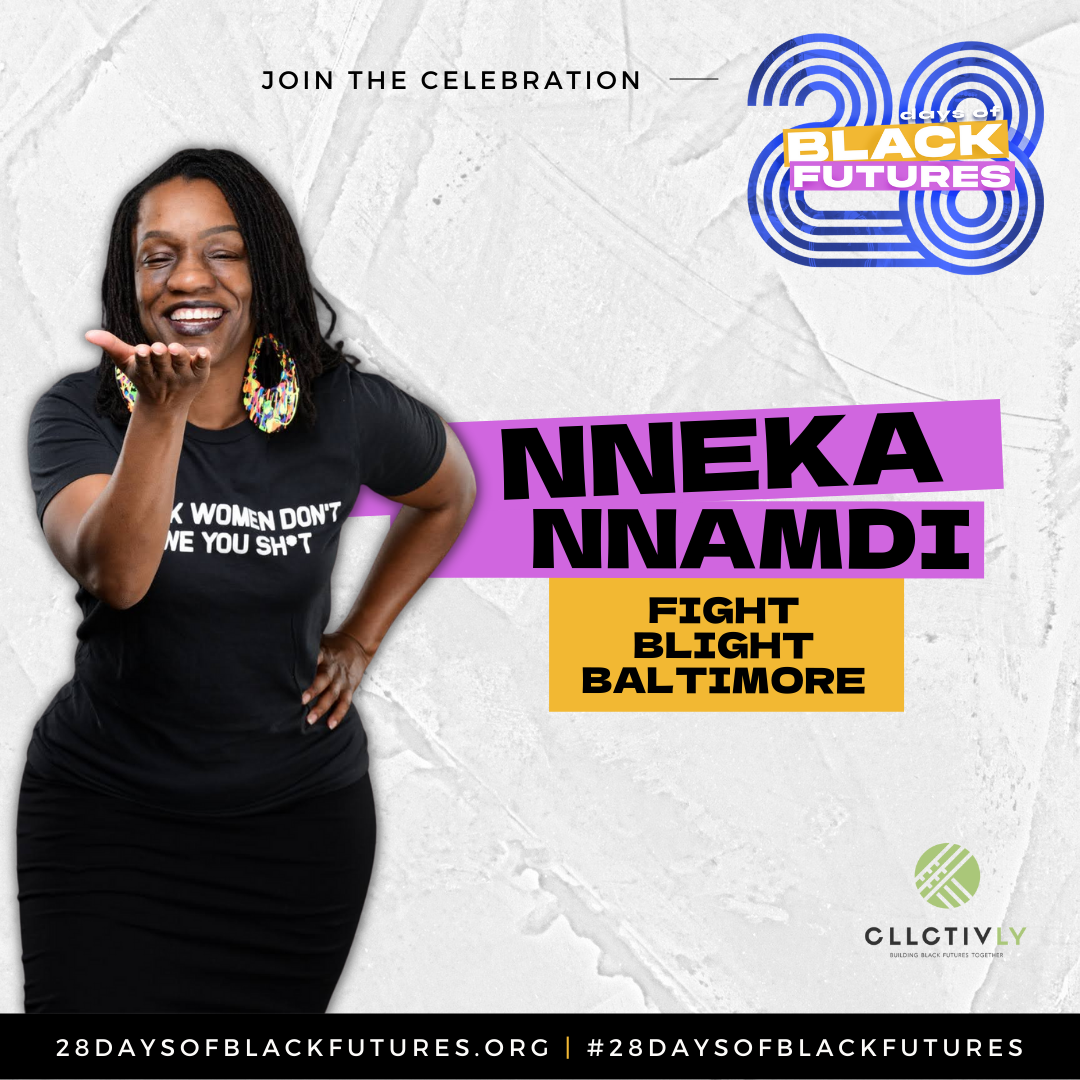
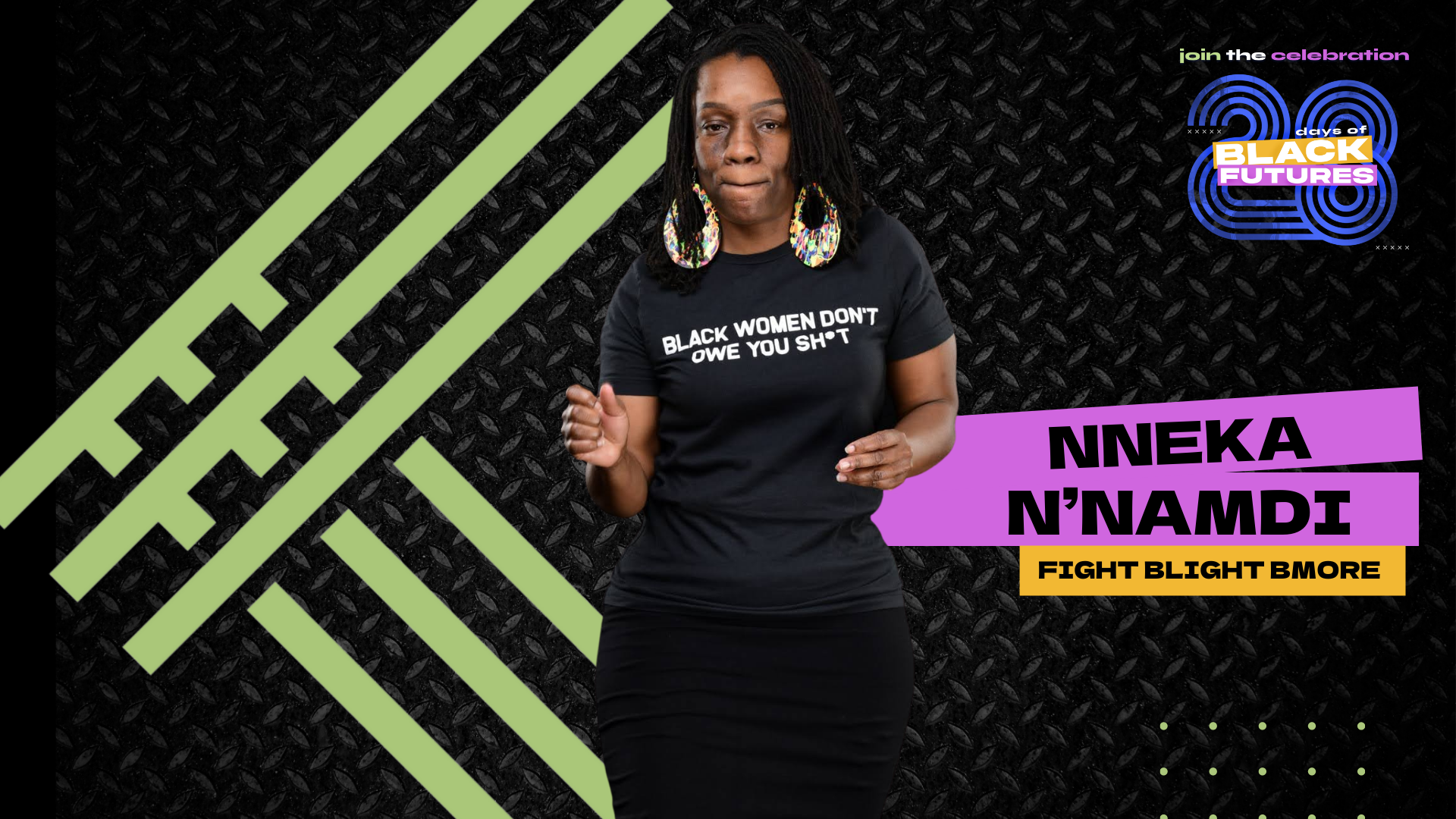
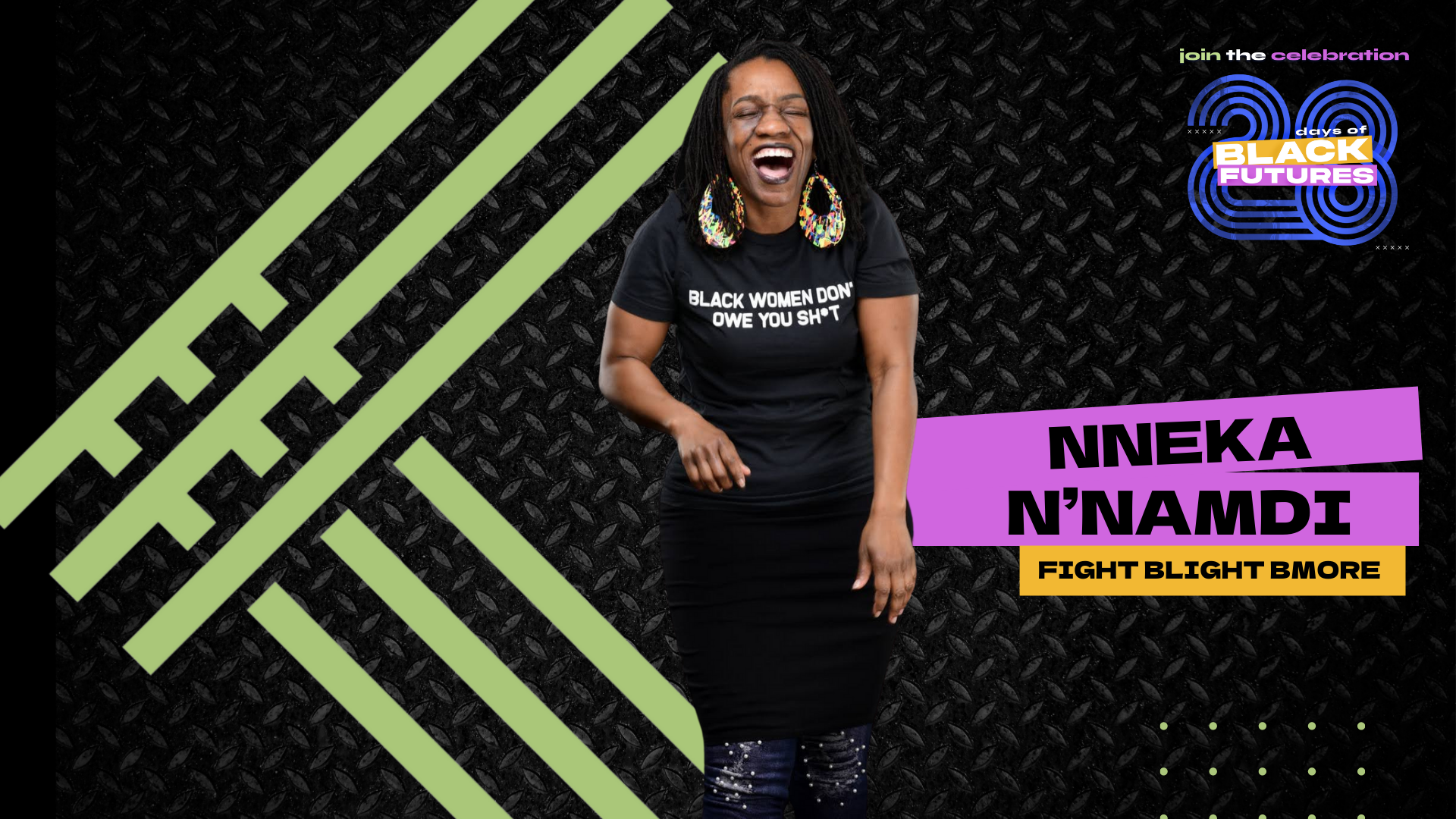
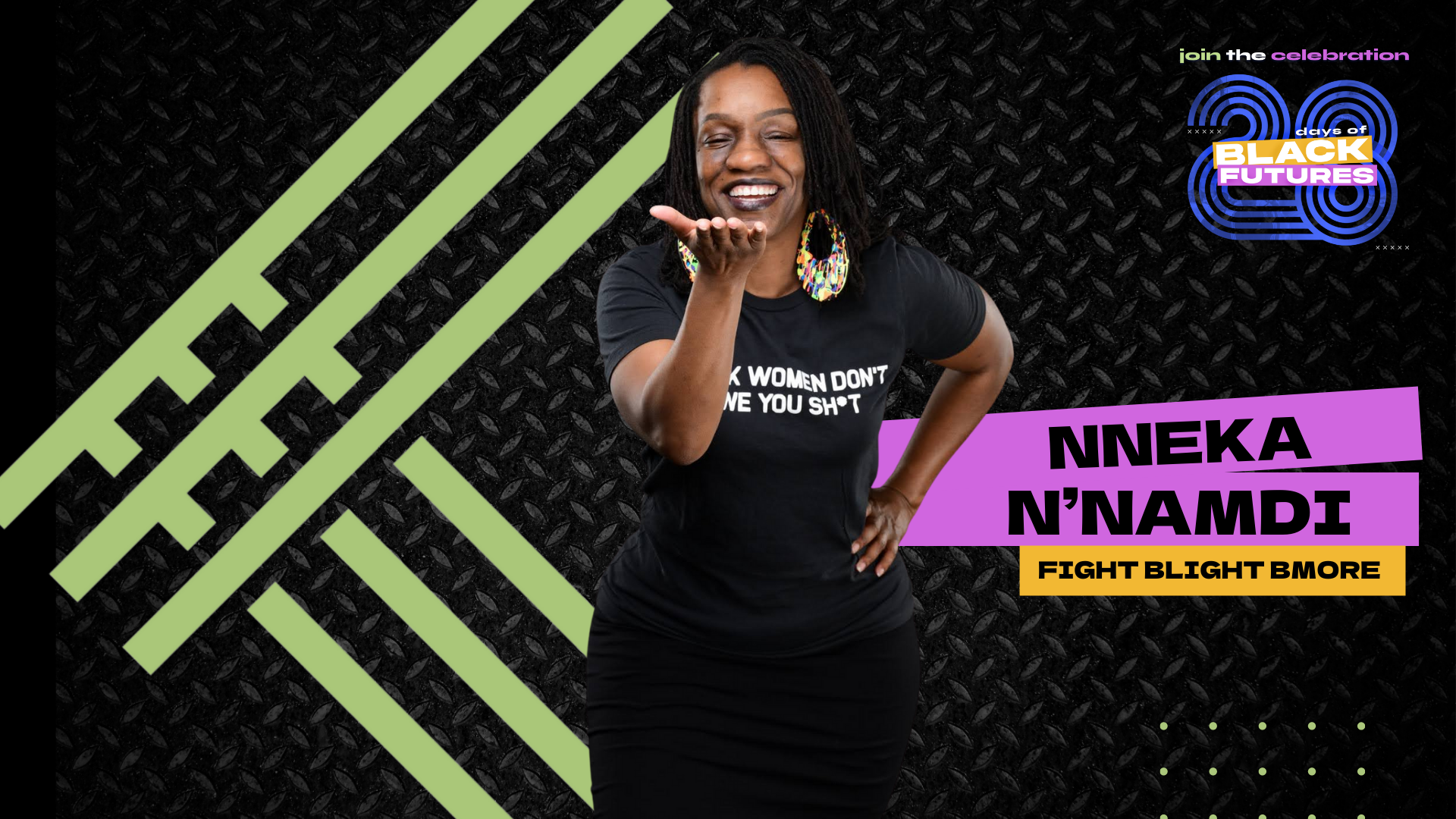
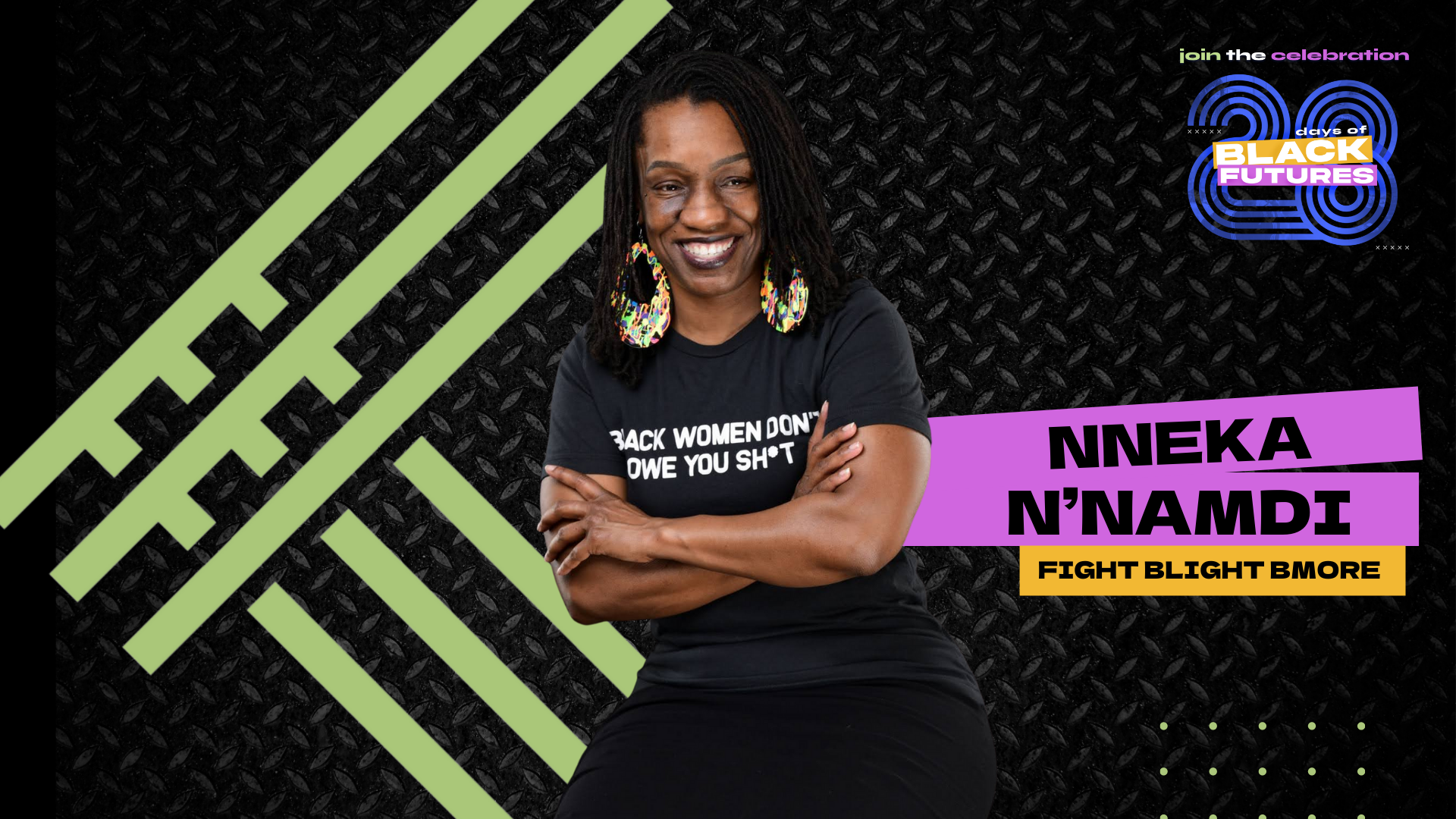
Founder and C.O.O. Nneka N’namdi noticed kids riding their bikes down Fremont Avenue in 2016; right pass the area where four abandoned houses were being demolished. She couldn’t help but notice that the work site—littered with piles of stone and metal, and ditches—was equipped with no sort of safeguard to keep people out. Nneka looked on anxiously, imagining how easily one of those children could wreck over a stray brick or fall into an obscure hole. Nneka immediately began gathering data on environmental hazards throughout Baltimore City. Her research revealed blight to be the prevalent consequence of both construction/demolition sites, and general lack of maintenance and funding from the city experienced majoritively by Black neighborhoods. “How did some neighborhoods in Baltimore become so blighted? Devaluing and disinvesting in Black communities. In short, racism is the reason.” That same year, a social, environmental and economic justice initiative “lead by the village and informed by the data” to expose and address blight in Baltimore was created under the name Fight Blight Baltimore.
Nneka, with all the funding she needed to fuel her mission, would develop Fight Blight Baltimore into “a full scale, community-based development company” that would undertake all variety of environmental development projects. These projects would vastly improve the aesthetic, cleanliness, and economic future of derelict Black communities, and make the air cleaner and safer to breathe. Her organization’s work would ultimately result in “community-owned property in Baltimore City”.
The Hack Hub, Fight Blight Baltimore’s youth program, mentors local youth in entrepreneurial skills, how to formulate unique ideas and bring them to life, and serves as a business startup space complete with 3D printers, internet access, and robots! Their Unblight the Block Ambassador Program offers communities members the opportunity to get directly involved and contribute ideas on how to better address the issue of blight. To get involved in their initiatives or contribute to making Baltimore’s Black communities greener and safer, visit them at cllctivly.org/listing/fight-blight-bmore or follow them @fightblightbmor.
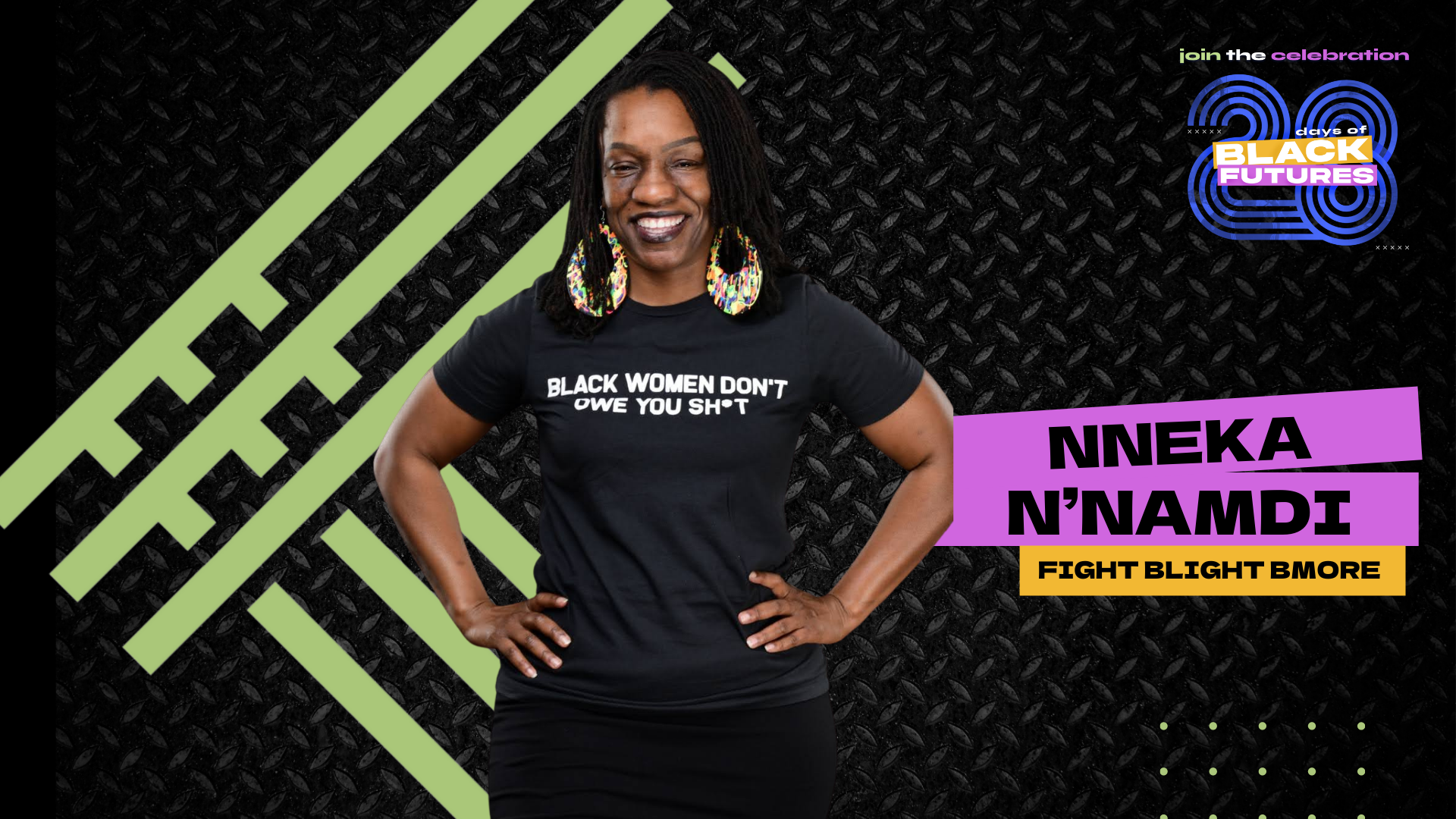
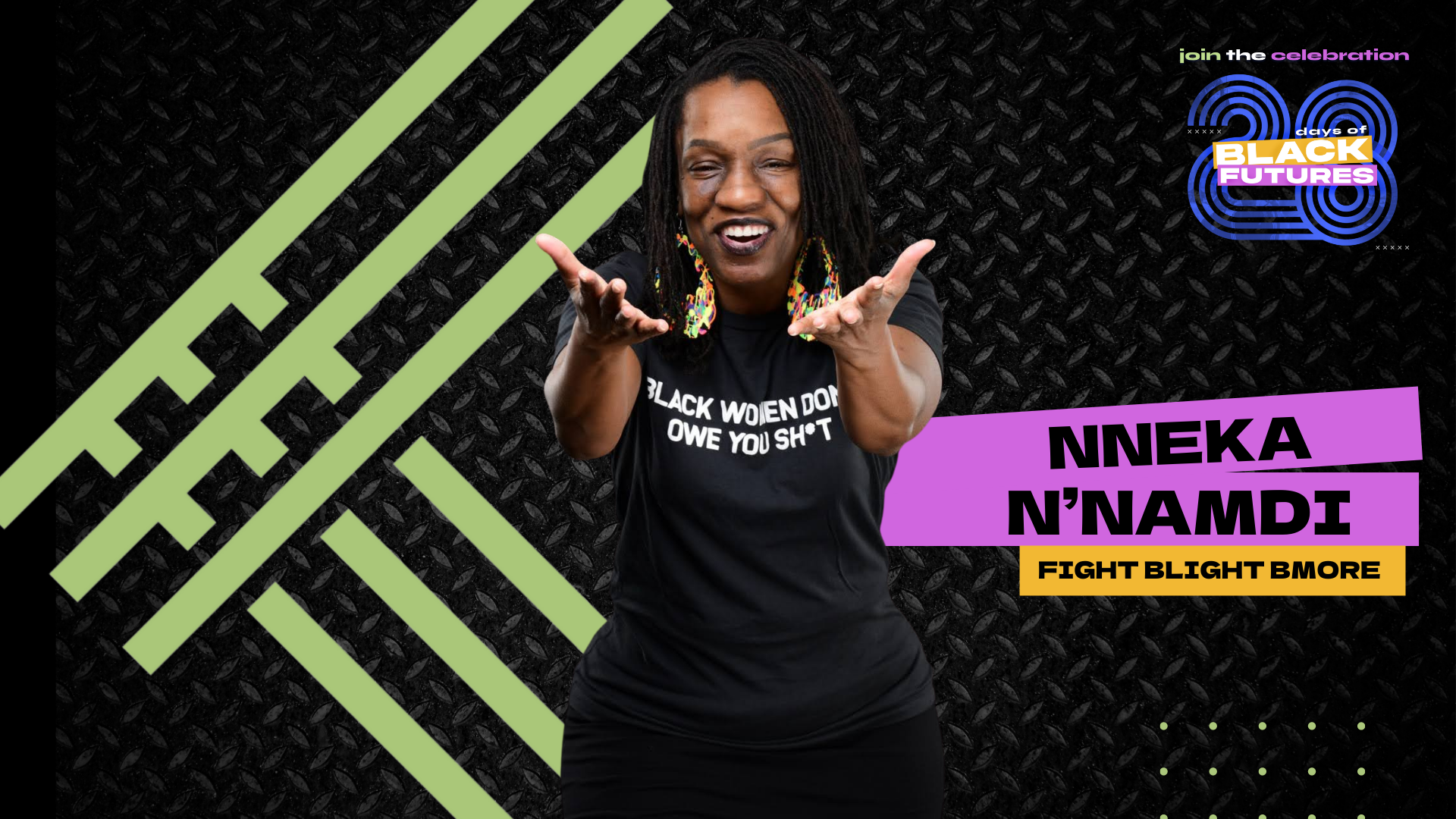
All February, we’re honoring a few of the many Black leaders in our community making history every day with #28DaysofBlackFutures.
This is a crowdfunding and narrative power campaign that amplifies and mobilizes resources for Black-led organizations serving Greater Baltimore.
Throughout the month, we will highlight 28 dedicated Black leaders and organizations on the ground creating programs and initiatives that drive health, wealth, safety, and culture in #Baltimore.
Let’s CELEBRATE these changemakers and SUPPORT their work! Our goal is to raise $100,000 by the end of this campaign.
Head over to 28DaysofBlackfutures.org to donate today! ❤️🖤💚
Let’s show up BIG for our Black leaders and their organizations!